
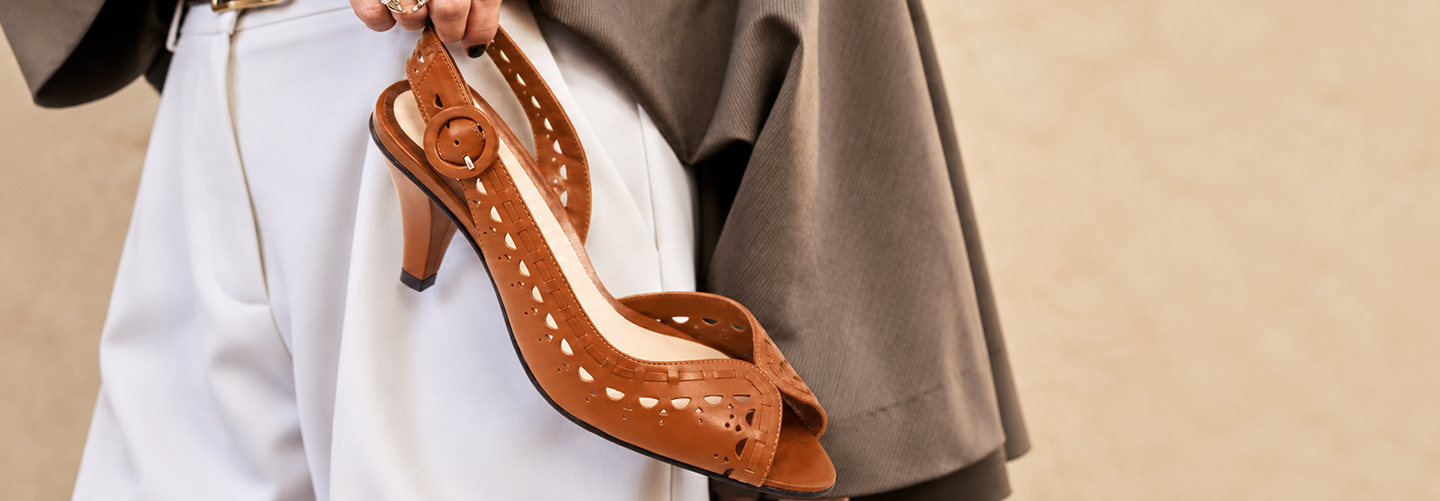
Have you ever faced that difficult question of which size to choose when you seem to be between two shoe sizes? This question tends to be more difficult than finding a shoe you like. While the smaller size tends to feel a better fit it can be slightly restrictive. On the other hand, a larger shoe size tends to have more spaces but it allows noticeable movement.
If you’re choosing either pair without thinking about how shoes behave during actual wear, you’re left with footwear that spends more time in storage than on your feet. There’s nothing unusual in being between two different sizes. Only one part of shoe fit is foot length. However, the printed size on your footwear doesn’t account for aspects like foot shape, width, construction, material, or even design.
Thus, instead of automatically sizing up or down, you must examine how each option fits your feet. This is important for a better fit.
Start With Your Actual Foot Measurements
When you know your actual shoe size, it tends to be especially helpful. However, it should not replace measuring your feet. Two feet are not necessarily identical, and foot dimensions can change gradually as well. Besides, one foot may end up being slightly longer or wider than the other. Thus, when your size falls between two sizes, you must consider the larger foot for measurement.
While standing, measure both feet, as your feet spread slightly when they support your body weight. It’s ideal to take measurements later in the day. This is the time when your feet may be somewhat fuller, as you’ve already undertaken all your normal daily activities.
Remember that length is simply the beginning. Whether a particular size works or not also depends on the width of your feet. While a shoe may have sufficient length to match yours, it can still end up feeling restrictive. This is largely because the shoe is too narrow for your foot.
Look at Where Your Toes Sit
When your heels feel appropriately positioned, the smaller size automatically seems to be the logical choice. Nevertheless, this doesn’t tell you the whole story. Consider examining what’s happening at the opposite end of the shoe as well.
There’s need for enough room for your toes to sit naturally, without being compressed against the front. Besides, they shouldn’t be forced tightly together as well. If you’re evaluating this space, stand upright. When you sit, you don’t put the same load on your feet. Thus, you may end up with inappropriate impression regarding the available room.
Besides, consider walking around as well. During each step, your feet move inside shoes. Therefore, a pair that may seem acceptable while standing still could become restrictive once you start moving. Are your toes repeatedly contacting the front of the smaller size? The more practical option is to size up.
Pay Attention to Width
Because a shoe is feeling narrow people sometimes size up, despite the length being appropriate. This can end up creating problems for you. With larger size additional width is provided, but it also tends to add unnecessary length as well. Your heel may start moving excessively. Even your foot may start sliding back and forth in your shoe.
Does the smaller size has adequate length but feels tight across the sides? The issue lies in the width of the shoes its shape and not its numerical size. If different widths are available, always consider those before increasing the length. Another aspect that matters is the natural shape of the toe. If the design is narrow and tapered, it fits differently from a wider, rounded construction. This happens even if both carry the same size label.
Check What Your Heel Is Doing
Toe pressure is often solved by choosing the larger option. But it also introduces excessive heel movement. Depending on the footwear construction, a small amount of movement may occur. However, if you’re facing significant slipping with every step, it clearly suggests that your shoe is too large or doesn’t correspond well with your foot.
Walk normally rather than taking only one or two cautious steps. Notice whether your heel remains reasonably stable. If your entire foot moves forward with every step, additional length may not be helping. Laces, straps, or other adjustment features can sometimes improve how safely a shoe sits. They should not, however, be expected to compensate for a substantial sizing mismatch.
Think About the Shoe's Purpose
Your size decision should reflect what you’ll actually do when you’re wearing the shoes that you’re purchasing. If your footwear is intended for extended periods of walking, this it will require internal space to accommodate normal foot movement. If your shoe is for wearing long stretches then you must account for slight changes in foot volume during the day.
Priorities may differ in the case of footwear that is used only occasionally or for shorter periods. You must therefore, consider movements associated with intended activities. Consider whether you’ll walk longer distances, stand for several hours, move quickly, climb stairs, or spend a majority of your time seated.
If more movement is involved, it becomes more important to test how the shoe behaves dynamically. You must then not judge it purely by how it feels when you’re static or when you don’t move.
Consider Your Socks
The differences between two sizes can be a pair of socks. Trying shoes wearing thin socks, while intending to wear thicker ones can result in the smaller size feeling more restrictive. On the other hand, if you’re testing footwear with unusually thick socks, it tends to make the footwear appear smaller than it really is.
Always try on shoes with socks that you regularly wear. With this simple step, you can ensure a more realistic assessment of internal space. This also reduces the need for compensating later with different socks. This can be particularly useful if you’re already close to the boundary between two different sizes.
Do Not Depend Too Much on Stretching
When the smaller size feels slightly tight, it can be tempting to assume that the shoes will eventually stretch enough to fit. Some materials may become more flexible with wear, but this does not mean a shoe that is fundamentally too short or narrow will automatically become suitable. Construction makes a significant difference. Certain areas may soften more readily than others, while structural components can retain much of their original shape.
A shoe should therefore provide a workable fit when you buy it. Do not choose an uncomfortable smaller size solely because you expect it to transform after repeated use.
Do Not Assume Bigger Is Always Safer
Sizing up is frequently suggested when someone falls between sizes, but larger is not automatically the correct answer. Excess internal space can allow your foot to slide. Your toes may instinctively grip in an attempt to stabilize your movement, while the heel can repeatedly lift away from the back of the shoe.
Instead of asking which option gives you more room, ask which one provides usable room. Your toes should have space without the entire foot moving excessively. Your heel should remain reasonably stable without being tightly compressed. Good fit requires a balance between space and stability.
What If Neither Size Feels Right?
Sometimes the answer is neither. If one size is clearly too small and the next is noticeably too large, the underlying problem may be the shoe's proportions rather than your feet. Different footwear designs use different internal shapes. The relationship between length, width, toe shape, heel construction, and overall volume can vary substantially.
Rather than forcing yourself to choose between two unsuitable options, consider a different construction or shape. A numerical size is useful only when the shoe itself corresponds reasonably well with your foot.
Choose Fit, Not the Number
When you fall between shoe sizes, there is no universal rule that says you should always size up or always size down. Start by evaluating your larger foot, then examine toe room, width, heel stability, socks, intended use, and movement. If the smaller option compresses your toes or creates persistent pressure, the larger size may be more appropriate. If the larger option causes substantial slipping, the smaller size or a differently shaped shoe may work better.
More importantly, do not become attached to a particular number. Shoe sizes are reference points, not descriptions of your feet. The number hidden inside the shoe matters far less than what happens when you stand, walk, and move in it. When two sizes are competing for your attention, choose the one that gives your feet appropriate space while keeping them stable, or recognize when neither size is the right match.